
Plan your visit
Curaçao Calling: A Modern Traveler’s Guide to the Caribbean’s Most Colorful Island
Curaçao sits just outside the hurricane belt in the southern Caribbean, a sun‑splashed island 56 kilometers north of Venezuela. It’s the vibrant “C” of the ABC Islands — a Dutch Caribbean blend of pastel‑painted architecture, desert landscapes, and hidden coves that feel worlds away from the typical resort circuit. With year‑round sunshine, a cosmopolitan culture, and some of the region’s best diving, Curaçao is the kind of place that rewards curiosity and slow wandering.
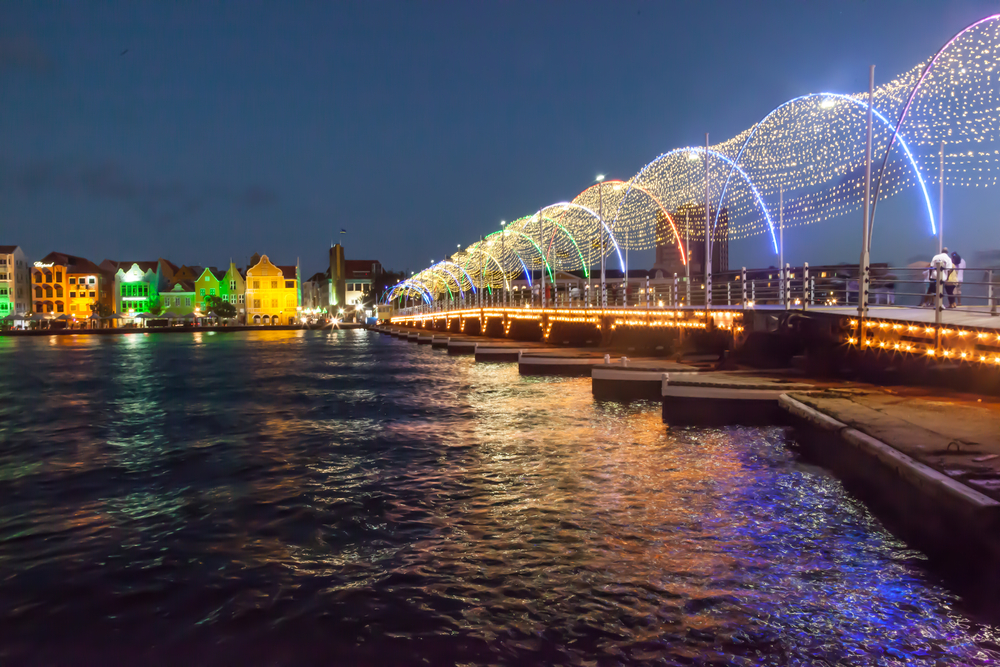
Willemstad, the island’s capital and a UNESCO World Heritage Site, is the beating heart of it all. The Queen Emma Bridge — a floating pedestrian bridge that swings open for passing ships — remains one of the island’s most charming spectacles, and the candy‑colored Dutch façades lining St. Anna Bay look like Amsterdam dipped in Caribbean sunlight.
Beyond the waterfront, Curaçao reveals a rugged, desert‑meets‑sea personality: wind‑shaped divi‑divi trees, towering cacti, and limestone cliffs that drop into turquoise water. It’s a landscape that feels more Baja than Bahamas — and that’s exactly its magic.
Beyond the waterfront, Curaçao reveals a rugged, desert‑meets‑sea personality: wind‑shaped divi‑divi trees, towering cacti, and limestone cliffs that drop into turquoise water. It’s a landscape that feels more Baja than Bahamas — and that’s exactly its magic.
Languages
Curaçao is one of the most linguistically diverse islands in the Caribbean, and that’s part of its charm. Nearly everyone you meet will speak English, but the island’s true cultural heartbeat lies in its multilingual rhythm.
The official languages are Dutch, Papiamentu, and English, and Spanish is widely spoken thanks to Curaçao’s proximity to South America and its long history of regional trade.
Papiamentu, the island’s beloved Creole language, is a melodic blend of Portuguese, Spanish, Dutch, African languages, and Indigenous influences. You’ll hear it everywhere — in markets, on the radio, and in the warm greetings from locals. A few phrases go a long way:
- Bon dia – Good morning
- Bon tardi – Good afternoon
- Bon nochi – Good evening
- Danki – Thank you
- Por fabor – Please
Curaçaoans switch between languages effortlessly, and visitors often find communication refreshingly easy. It’s one of the reasons the island feels so welcoming and cosmopolitan.
Currency
The official currency is the Netherlands Antillean guilder (ANG), also known locally as the florin. The exchange rate is fixed at:
- 1 USD = 1.80 ANG
- 1 ANG = 0.56 USD
This long‑standing peg makes prices predictable and conversions simple.
US dollars are accepted almost everywhere, from supermarkets to beach bars, though change may be given in guilders. Credit and debit cards are widely used, especially Visa and Mastercard. American Express is accepted at many hotels and upscale restaurants but not universally.
A few practical notes:
- ATMs dispense guilders, not USD.
- Euros can be exchanged only at banks or official exchange offices.
- Small vendors, food trucks, and beach kiosks may prefer cash.
For travelers, the dual‑currency convenience makes Curaçao one of the easiest islands in the region to navigate financially.
Money & Tipping in Curaçao:
- USD widely accepted
- Euros exchanged only at banks
- Credit cards accepted almost everywhere
Typical tipping norms:
- Restaurants: 8–12% (sometimes a 12–15% service charge is already added)
- Taxis: ~10%
- Porters: 1 ANG per bag
Electricity
Curaçao’s electrical system is a blend of American and European standards, so it’s worth checking your devices before you pack.
Most outlets supply 110–130V at 50Hz, using Type A plugs — the same flat two‑pin plugs used in the United States and Canada. This means that most North American electronics work without adapters.
However, many hotels, apartments, and newer buildings also offer 220V European‑style outlets (Type C or F). If you’re traveling with European appliances or dual‑voltage devices, you’ll be able to plug in easily.

What to bring:
- A universal travel adapter (highly recommended)
- A voltage converter only if your device is not dual‑voltage (most modern electronics are)
Curaçao’s power supply is stable, and outages are rare. Whether you’re charging a camera after a day of diving or plugging in a laptop to plan tomorrow’s beach hop, you’ll find the island’s electrical setup easy to navigate.
Traveling to Curaçao: Flights, Airports & Cruises
Reaching Curaçao is easier than ever, thanks to a growing network of international flights and a steady stream of cruise itineraries that place Willemstad among the Caribbean’s most photogenic ports of call. Whether you’re flying in for a week of beach‑hopping or arriving by sea for a day of pastel‑colored charm, the journey is smooth, modern, and well‑connected.
✈️ Flying to Curaçao (CUR)
Curaçao International Airport (CUR), also known as Hato International Airport, is the island’s main gateway — a sleek, efficient hub located just 10–15 minutes from Willemstad. Despite the island’s modest size, CUR enjoys robust air service from North America, Europe, and Latin America.
Direct Flights from the United States
Several major U.S. cities offer direct or one‑stop flights to Curaçao, with American Airlines being the most frequent operator. According to recent flight data, American Airlines is the most popular carrier, operating dozens of weekly flights to CUR .
Typical U.S. departure cities include:
- Miami (MIA) – frequent direct flights
- Charlotte (CLT) – seasonal or weekly service
- New York (JFK/EWR) – direct and one‑stop options
- Atlanta (ATL) – seasonal service via Delta
- Washington, D.C. (WAS) – Delta offers round‑trip fares and seasonal routes
Flight times from the East Coast average 4–5 hours, making Curaçao one of the most accessible Caribbean islands for U.S. travelers.
Flights from Europe
Amsterdam (AMS) remains Curaçao’s strongest European connection, with daily long‑haul flights operated by:
- KLM Royal Dutch Airlines
- TUI fly Netherlands
These flights run year‑round and are among the most reliable transatlantic routes in the region.
Flights from Latin America & the Caribbean
Curaçao is a regional hub with frequent service from:
- Aruba (AUA)
- Bonaire (BON)
- Panama City (PTY) via Copa Airlines
- Bogotá (BOG) via Avianca
- Santo Domingo (SDQ) via Arajet
- Suriname & Trinidad via regional carriers
Short island‑hopping flights from Aruba and Bonaire take 20–30 minutes, making multi‑island trips effortless.
Budget Airlines & New Routes
Low‑cost carriers such as Arajet and Wingo have expanded service to Curaçao, offering competitive fares from the Caribbean and Latin America. Google Flights lists these among the popular airlines serving CUR
🚢 Arriving by Cruise Ship
Willemstad is one of the Caribbean’s most iconic cruise ports — not just for its UNESCO‑listed waterfront, but for the unforgettable moment when ships glide past the Queen Emma Bridge into St. Anna Bay.
Curaçao is a regular stop on itineraries from:
- Royal Caribbean
- Carnival Cruise Line
- Celebrity Cruises
- Norwegian Cruise Line
- MSC Cruises
Cruise passengers dock directly in Otrobanda, steps from the historic center, shopping districts, and the famous Handelskade skyline. Peak cruise season runs from November through April, though ships call year‑round.
Getting to Curaçao is remarkably effortless, which is part of the island’s growing appeal.
With more than forty weekly flights operated by major international airlines, travelers can reach Curaçao from North America, Europe, and Latin America with surprising ease, often at fares that remain competitive throughout the year. Its location outside the hurricane belt means flights are rarely disrupted by severe weather, offering a level of reliability that many Caribbean destinations can’t match.
For those of you arriving by sea, the cruise ships will dock directly in the heart of Willemstad, placing passengers just few steps away from the city’s iconic waterfront. Altogether, Curaçao’s accessibility — by air or by cruise — makes the journey as pleasant as the stay itself.
Best Perios to Visit Curaçao
Curaçao is blessed with one of the most reliable climates in the Caribbean — warm, dry, and gloriously sunny throughout the year. Its location outside the hurricane belt means the island avoids the storms that affect much of the region, making it a dependable destination no matter the season.
Peak season runs from December through April, when travelers flock to the island for perfect beach weather, lively festivals, and perfect water visibility, ideal for diving and snorkeling. Hotel rates rise during these months, but so does the island’s energy.
From May to November, Curaçao settles into a quieter rhythm. Prices drop, crowds thin, and the weather remains consistently warm, with only brief, passing showers. For travelers seeking value without sacrificing sunshine, this is the sweet spot.
Accommodation Options in Curacao
When it comes to finding the perfect place to stay in Curacao, you’ll discover a diverse range of options to suit your preferences. From vacation apartments to all-inclusive hotels, hostels to exclusive five-star resorts, the island offers a full selection of accommodations to cater to different needs and budgets.
While there are two fully all-inclusive hotels available in Curacao, namely “Sunscape Curacao Resort & Casino” and “Kunuku Aqua Resort”, it’s worth noting that many larger hotels also offer all-inclusive packages. We recommend checking the listings of your preferred hotel to see if they provide such packages to enhance your stay.
It’s important to mention that the majority of hotels in Curacao have restrictions on pets, although exceptions may be made for service animals.
Is Curaçao a safe destination?
Curaçao is widely regarded as one of the safest islands in the Caribbean, thanks to its stable political environment, strong infrastructure, and welcoming local culture. Violent crime is rare, and most visitors experience a relaxed, trouble‑free stay. As with any destination, petty theft can occur, particularly in busy tourist areas or if valuables are left unattended on beaches or in cars.
Solo travelers generally find Curaçao comfortable and easy to navigate. The island’s multilingual population, reliable transportation, and well‑lit urban areas contribute to a sense of security. Emergency services are responsive, and the island’s healthcare facilities are modern and well‑equipped.
And yet, caution is always necessary. As a rule of a thumb, never leave drinks unattended and avoid walking alone while intoxicated or away of the tourist arwas.
Tips for a Safe Trip to Curaçao:
⌚ Keep valuables secure and avoid leaving items in rental cars.
👮 Use standard travel awareness in crowded areas.
🍷 Avoid walking alone while intoxicated.
🚑 Emergency number: 911
🧳 Travel insurance is recommended for peace of mind.
Navigating Curaçao: Tips to Getting Around
Exploring Curaçao is part of the adventure, and the island offers several ways to get from one postcard‑worthy spot to the next. While public buses connect major districts, service can be infrequent, making them best suited for short trips within Willemstad. Minibuses — small vans that operate on flexible routes — are more frequent and popular with locals.
Taxis are safe and regulated, though fares can add up quickly for long distances. For travelers who want to explore beaches, national parks, and hidden coves at their own pace, renting a car is by far the most convenient option. Roads are generally well maintained, and driving is straightforward. Cycling is possible in some areas, but the island’s heat, hills, and traffic make it challenging for most visitors.
Public Transportation
Curacao offers a limited public bus network known as “Konvooi,” primarily serving Willemstad, Punda, and Otrobanda. While the buses run infrequently, they provide transportation within these areas. Fare for bus rides is approximately 2.40 ANG, equivalent to just over $1.
Additionally, 9-person vans labeled as buses can be flagged down for more frequent travel, although they operate without a fixed schedule.
Bicycles
Despite being a Dutch colony, getting around Curacao by bicycle can be challenging. Bike rentals typically cost around 45 ANG per day, or 35 ANG for weekly or longer rental periods.
Taxis
Taxis in Curacao are reliable and safe. While not all taxis have meters, most have rate sheets. It is advisable to agree on the fare before entering the cab.
Taxis are suitable for navigating Willemstad, but longer journeys can be quite expensive. If you’re on a budget, it’s recommended to opt for alternative transportation methods instead of taxis.
Car Rental
Renting a car is a cost-effective and efficient way to explore the island. The average daily rental cost for a multi-day rental is approximately 80-90 ANG. Drivers must be at least 21 years old.
Booking online your rental before arriving is advisable for better rate than airport’s rental.
Hitchhiking
Hitchhiking is very uncommon in Curacao. It is advisable to rely on the bus system or opt for a car rental instead.
En bref:
- Konvooi buses: Reliable but infrequent; best for Willemstad
- Minibuses: Flexible, frequent, and budget‑friendly
- Taxis: Safe, fixed‑rate fares; confirm price before entering
- Car rentals: Most efficient way to explore; book ahead
- Bicycles: Limited practicality due to terrain and heat
Curaçao Cash And Tipping Habits
In Curacao, US Dollars are widely accepted, making transactions convenient. The exchange rate used for calculations is usually 1 USD = 1.80 ANG.
Euros can only be exchanged at banks.
Credit and debit cards are also widely accepted, but it’s advisable to carry some cash, either in US Dollars or Antillean Guilders, especially for certain locations or small shopping on the street.
Restaurants typically include a service charge of around 12% on the bill, while hotels may add a 15% service charge. These charges are separate from tipping, which is left to your discretion as an expression of appreciation for hospitality and services rendered.
It is customary to tip taxi drivers around 10% of the fare, provide porters with approximately 1 ANG per bag, and offer waiters gratuities ranging from 8% to 12% of the total bill.
If you require small currency exchanges, your hotel’s front desk may assist you by exchanging USD or EUR.
Island local cuisine
Curacao’s cuisine is a delightful fusion of Dutch, Caribbean, African, and South American influences. Seafood takes center stage, with mahi-mahi, red snapper, and grouper being popular catches around the island. Fresh fruits also abound, offering a burst of tropical flavors.
For an authentic local experience, head to Marsche Bieuw, the Old Market landmark in downtown Willemstad, where generous portions and unbeatable prices await. Seating operates on a first-come, first-served basis, so arriving early is advisable. Another must-try is the famous roadside “sneks” scattered across the island, offering refreshing drinks, savory pastechis (savory pastries), and more.
When in Curacao, don’t miss the chance to savor local dishes like Kabritu Stoba (goat stew), Yuana (stewed iguana), Keshi Yená (cheese stuffed with meat), Ayaka (spiced meat wrapped in cornmeal dough, served during Christmas), raw herring, fish tacos, fresh mussels, and Oliebollen (small fried donuts).
For those seeking quick bites, sandwiches, burgers, and other fast food options typically range from 8 to 15 ANG per meal. At McDonald’s, a combo meal costs around 20 ANG. A casual seafood or local cuisine meal at a restaurant usually costs around 35 ANG, while indulging in a three-course meal with a drink at a mid-range establishment can be closer to 75 ANG.
Quench your thirst with a beer, priced between 6 and 10 ANG, or enjoy a latte or cappuccino for around 7 ANG. Bottled water is approximately 4 ANG.
If you plan on preparing your own meals, expect to spend around 120-160 ANG on basic groceries for a week. This will cover essentials like rice, pasta, seasonal produce, and some meat or fish.
For vegan options, Vita Vegetarian Cuisine is currently the only strictly vegetarian restaurant offering vegan choices. However, vegetarian options are increasingly available at most restaurants, with many establishments now featuring vegan menu items as well. The dining scene in Curacao has evolved to accommodate various dietary preferences.
If On a Budget: Money-Saving Tips
Being mindful of your expenses is crucial in Curacao, although it remains more budget-friendly compared to other Caribbean islands. To help you make the most of your finances during your visit, here are some effective money-saving tips:
- Explore During the low Season – Save up to 50% on accommodation and activities by opting to visit during the shoulder season. Avoiding the peak tourist period allows for more budget-friendly experiences (more details on this below).
- Embrace Local Hospitality – Plan in advance to find a hospitable Couchsurfing host in Curaçao. Staying with a local not only provides free accommodation but also offers the opportunity to connect with insiders who can share invaluable tips and insights.
- No Taxis – Taxis in Curaçao can be quite pricey, making it advisable to avoid them whenever possible to minimize expenses.
- Secure a Rental Car – Renting a car offers the most economical and convenient means of exploring the island, especially when traveling with companions. Not renting a car was my biggest regret during my visit to Curaçao. Sharing the cost of a car rental with other travelers ensures affordability.
- Hydration on a Budget – Carry a reusable water bottle and take advantage of the safe tap water available in Curaçao. By reducing plastic waste and using a trusted brand like LifeStraw with built-in filters, you can ensure access to clean and affordable drinking water throughout your trip.
- Beachside BBQ Bliss – Join the locals in their popular beachside BBQ tradition, saving a significant amount on food expenses. Many beaches, such as Daaibooi Beach, provide BBQ pits for public use. Opting to cook your own meals will greatly contribute to your savings, so give restaurants a miss.
Cultural Etiquette in Curacao: Embrace the International Atmosphere
Curacao’s cultural norms are best described as international due to its proximity to South America and strong influences from North America and Europe. The locals in Curacao are known for their laid-back, welcoming, and accepting nature, making it easy to fit in seamlessly.
In religious settings, it is customary to keep your voice down as a sign of respect. Additionally, wearing a kippah is required when visiting the synagogue. When entering a store, supermarket, or restaurant, it is considered impolite to be dressed solely in a bathing suit, and you may be denied service.
There is one local tradition that may initially disconcert North American visitors, particularly those from the United States. Between mid-November and early December, Curacao celebrates Sinterklaas, a tradition originating from The Netherlands. This festive occasion is similar to modern Christmas and involves an older father figure, Sinterklaas, who, alongside his helpers known as Petes, brings gifts for children. It’s important to note that the Petes, portrayed by individuals of various ethnic backgrounds, traditionally blacken their faces as part of their costume.
While this may resemble the old American theater practice of blackface, it carries different connotations in Curacao compared to the United States.
By respecting these cultural nuances and traditions, you can fully embrace the diverse and inclusive atmosphere of Curacao.
Cultural Celebrations and Festivals in Curacao
Curacao is known for its vibrant festivities and cultural events throughout the year. The excitement kicks off just days after the new year begins with the start of Curaçao Carnival, which lasts until the evening before Ash Wednesday. The Carnival period varies in date each year, but the main parades take place during the final 10 days of the Carnival.
In April, Curacao hosts noteworthy events such as the Curaçao International Film Festival Rotterdam and King’s Day, offering a blend of film screenings and celebratory activities.
The highly anticipated Curaçao North Sea Jazz Festival takes place during the final weekend of August, showcasing world-class musical performances.
Late December and early January are brimming with traditions, including Christmas celebrations, pagaras or fireworks displays, New Year’s Eve festivities, and Fuik Day, a beloved event that takes place on the first Sunday of the year, where boaters gather for a vibrant water party.
Throughout the year, Curacao offers a rich tapestry of cultural experiences and celebrations, inviting locals and visitors alike to immerse themselves in the island’s vibrant spirit.